
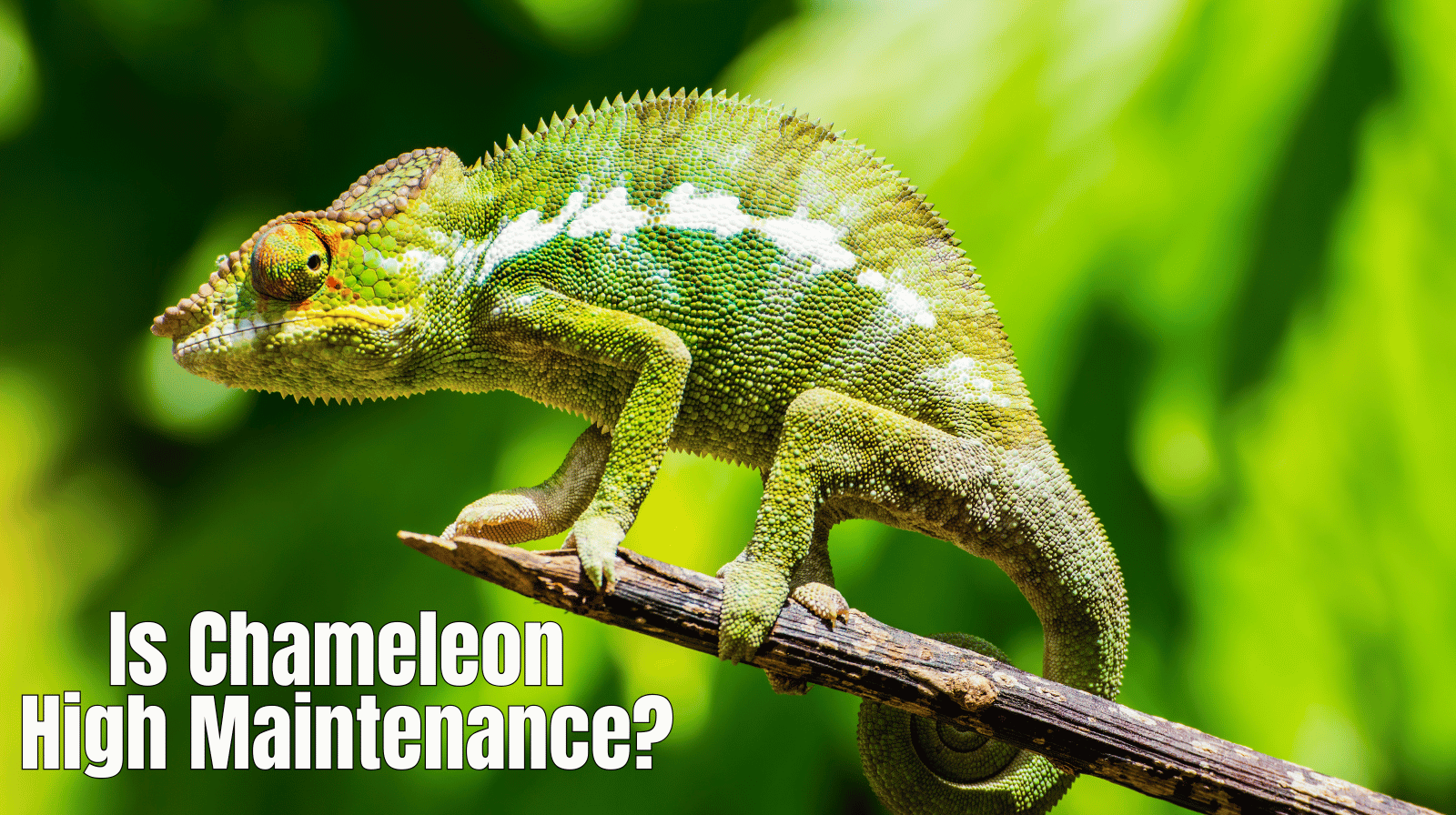
If you’ve ever seen a chameleon slowly shifting colors while gripping a branch with those tiny mitten-like feet, you’ve probably thought the same thing most people do: I want one. They look calm, exotic, and almost magical. But before you start shopping for a terrarium, there’s a big question to answer:
Are chameleons high maintenance?
The short answer?
Yes — compared to many common pets, chameleons are definitely on the high-maintenance side.
But that doesn’t mean they’re impossible to care for. It just means they require commitment, precision, and a willingness to build a tiny slice of the rainforest inside your home.
Let’s break it down in a realistic, human way.
They’re Not “Handle-Me” Pets
One of the biggest surprises for new owners is this: chameleons don’t enjoy being handled.
Unlike dogs, cats, or even bearded dragons, chameleons are generally solitary and easily stressed. Handling them too often can cause anxiety, suppress their immune system, and even shorten their lifespan.
They’re more like living art pieces — fascinating to watch, but not meant for constant interaction. If you’re looking for a cuddly reptile you can take out daily, a chameleon will probably disappoint you.
So emotionally speaking, they’re high maintenance in a different way: you have to resist the urge to treat them like a traditional pet.
Their Enclosure Setup Is Complicated
This is where things get serious.
A proper chameleon setup isn’t just a tank with a heat lamp. It’s a carefully balanced environment that mimics tropical conditions. Most commonly kept species, like the veiled chameleon or panther chameleon need:
-
Tall, well-ventilated enclosures (usually screen cages)
-
UVB lighting
-
Heat gradients
-
Live plants
-
Climbing branches
-
Controlled humidity
-
A misting or drip system
Unlike some reptiles that tolerate small mistakes, chameleons are sensitive. Incorrect UVB exposure can lead to metabolic bone disease. Poor humidity can cause dehydration and shedding problems. Temperatures that are too high or too low can stress them quickly.
You’re basically becoming a part-time climate manager.
And yes — that’s high maintenance.
Feeding Is More Than Just “Throwing in Bugs”
Chameleons eat insects — but not just any insects.
They need a varied diet: crickets, dubia roaches, silkworms, hornworms, and occasionally other feeder insects. But it doesn’t stop there.
Those insects must be:
-
Gut-loaded (fed nutritious food before being offered)
-
Dusted with calcium
-
Supplemented with vitamins on a schedule
Miss the calcium? You risk bone deformities.
Overdo vitamins? You can cause toxicity.
It’s a balancing act.
Plus, you’ll be keeping live insects in your house — something many people don’t fully consider before committing.
Hydration Is Tricky
Here’s something that surprises most new owners:
Chameleons don’t usually drink from bowls.
In the wild, they lick water droplets off leaves. That means you need to recreate that behavior in captivity through misting systems or drip systems. Some owners mist by hand multiple times a day. Others invest in automatic misting machines.
If hydration isn’t managed properly, chameleons can become dehydrated quickly — and they don’t always show obvious signs until it’s serious.
So yes, their water needs alone make them more demanding than many pets.
They’re Prone to Health Issues
Chameleons are delicate reptiles. Common health problems include:
-
Metabolic bone disease
-
Respiratory infections
-
Parasites
-
Vitamin deficiencies
-
Stress-related illness
And here’s the hard part: reptile vets are not always easy to find.
Unlike dogs or cats, exotic animal care can be expensive and specialized. If something goes wrong, you need access to a veterinarian experienced with reptiles — and that can be costly.
So financially and logistically, they can be high maintenance.
They Require Daily Attention (Even If You Don’t Touch Them)
Even though they don’t want cuddles, chameleons still need daily monitoring.
You need to:
-
Check temperature and humidity
-
Monitor eating habits
-
Observe droppings
-
Watch for color changes that indicate stress
-
Maintain clean conditions
They’re not a “set it and forget it” pet.
In fact, they’re the opposite.
So… Why Do People Still Get Them?
With all that said, you might wonder — why would anyone choose a chameleon?
Because they are incredible.
Watching a chameleon move is unlike any other animal. Their independent eye movement. Their slow, deliberate steps. The lightning-fast tongue strike. The subtle shifts in color when they’re relaxed or stressed.
Owning one feels like caring for a tiny, living ecosystem.
For experienced reptile keepers who enjoy creating precise habitats and observing natural behavior, chameleons are deeply rewarding.
They’re just not beginner pets.
Are They Good for First-Time Reptile Owners?
Honestly? Not usually.
If someone has never owned a reptile before, a chameleon is a steep learning curve. Bearded dragons, leopard geckos, or corn snakes are generally more forgiving and easier to manage.
Chameleons require:
-
Research before purchase
-
A full setup before bringing one home
-
Consistency every single day
Impulse buying a chameleon is one of the most common mistakes people make — and sadly, many chameleons suffer because of it.
The Bottom Line
So, are chameleons high maintenance?
Yes.
They require specialized housing, precise environmental control, careful feeding routines, limited handling, and close health monitoring. They’re sensitive, easily stressed, and not ideal for casual pet owners.
But high maintenance doesn’t mean “bad.”
It just means they demand respect, preparation, and dedication.
If you’re someone who enjoys research, loves reptiles, and is willing to invest time and effort into creating the perfect habitat, a chameleon can be an amazing companion — in its own quiet, watch-from-a-distance kind of way.
If you’re looking for something low effort and interactive, though, this probably isn’t your pet.
Before getting one, ask yourself one honest question:
Do I want a pet to handle…
Or do I want a pet to observe and carefully care for?
Your answer will tell you everything you need to know.